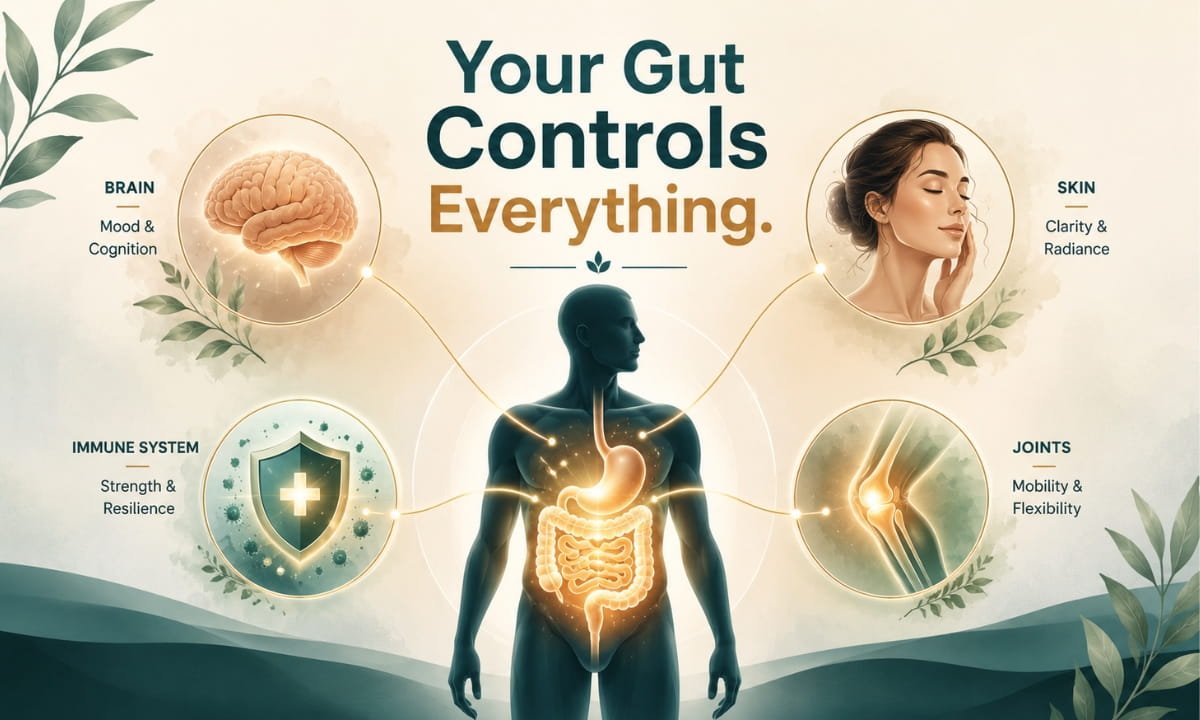
Most people think of the gut as just a digestion organ. But research now confirms that gut health is connected to the health of the whole body, including your brain, skin, immune system, and joints. When the colon is congested with built-up waste and toxins, the rest of the body feels it, sometimes long before a digestive complaint shows up. That’s why clearance comes before colonization. Pouring probiotics into a backed-up system rarely works. First you have to clear the terrain. Colon hydrotherapy is one of the most direct ways to do that.
What Is Gut Health, Really, and Why Is Everyone Talking About It?
You’ve probably seen the phrase “gut health” everywhere lately. On supplement labels, in wellness newsletters, across social media. But what does it actually mean?
Gut health refers to the balance and function of the entire digestive tract, from your stomach to your large intestine (colon). At the heart of it is your gut microbiome, a vast community of trillions of bacteria, fungi, and other microorganisms that live inside you. These microbes don’t just help you digest food. They manufacture neurotransmitters, train your immune system, regulate inflammation, and influence how you think and feel.
When this ecosystem is balanced, you tend to feel well. When it’s disrupted, the signals travel far beyond the bathroom. Bloating and sluggish digestion are often the first complaints, but brain fog, chronic fatigue, adult acne, joint aches, and persistent low mood frequently follow close behind.
This is not wellness speculation. The gut-brain-skin axis is now a recognized area of active scientific research, and the findings are turning heads in clinical circles.
The Gut-Brain Connection: Your Second Brain Is Running More Than You Think
Here’s something most people find genuinely surprising. Approximately 90 to 95 percent of your body’s serotonin, the key neurotransmitter involved in mood regulation, is produced in the gut, not the brain.
Research demonstrates that Lactobacillus and Bifidobacterium species, two of the most well-studied beneficial bacterial genera, produce both GABA and serotonin, neurotransmitters that are central to mood regulation. When these bacteria are depleted, neurotransmitter synthesis becomes disrupted, influencing both gut and brain function. PubMed Central
This is why people with poor gut health often experience unexplained anxiety, low mood, or mental cloudiness that doesn’t respond to lifestyle changes alone. Evidence now indicates that gut microbiota modulate neurochemical pathways involving serotonin, dopamine, GABA, and glutamate, as well as immune and endocrine axes, and that dysbiosis has been associated with neuropsychiatric conditions including depression, anxiety, cognitive decline, and impulsivity. MDPI
The practical implication: if you’ve been struggling with mood or focus, and conventional approaches aren’t cutting it, the colon may be part of the conversation no one has started with you yet.
“Gut feelings truly are gut feelings. So much of our mood regulation and emotional wellbeing originates not in our minds, but in our bellies.”
Your Immune System Lives in Your Gut. Most People Don’t Know That.
Here’s the second headline that tends to surprise people. Roughly 70 percent of your immune system is located in and around the gut wall, specifically in a network called the gut-associated lymphoid tissue (GALT). The gut is, in a very literal sense, the first line of immune defense.
Emerging research supports the dynamic relationships between the gut microbiota as an ecosystem within the human host, and its intersection with the immune and nervous systems. When the colon becomes congested or the microbiome falls out of balance, this immune machinery is compromised from the inside. Frontiers
The result is often a pattern many people recognize in themselves: recurring infections, seasonal allergies that seem to get worse every year, chronic low-grade inflammation, and an immune system that feels like it’s constantly either overreacting or under-performing. Clearing and supporting the colon is not separate from immune support. In many cases, it is immune support.
The Gut-Skin Axis: Why Topical Treatments Often Miss the Point
Adult acne that won’t respond to creams. Persistent eczema. Dullness or inflammation that no skincare routine seems to fix. These are common complaints at wellness and dermatology clinics alike, and increasingly, the research points inward.
In the last decade, the gut-skin-brain axis has emerged as a recognized research field, with growing evidence on how intestinal microbiota can affect the development of skin diseases and neurological and psychiatric disorders. nih
The mechanism is more direct than it sounds. When the gut lining becomes permeable (commonly called leaky gut), bacterial fragments and inflammatory compounds enter the bloodstream. The skin, as the body’s largest organ, often becomes a visible indicator of this internal inflammation, expressing it as redness, congestion, or breakouts.
Topical antibiotics can temporarily suppress surface bacteria, but they may also kill beneficial intestinal flora in the process, making the underlying problem worse. A strategy that starts from within, supporting the colon environment and rebalancing the microbiome, addresses the root driver rather than the symptom.
Joint Pain, Headaches, and Fatigue: Symptoms That Start in the Colon
One of the more counterintuitive findings in gut health research is the link between colon congestion and symptoms that seem entirely unrelated to digestion. Joint pain, migraine frequency, and persistent fatigue are among the most commonly reported improvements by people who complete a series of colon hydrotherapy sessions at Atlant Health.
This makes physiological sense. When waste accumulates in the large intestine and the colon wall becomes permeable, toxins are reabsorbed into the bloodstream rather than expelled. The liver, tasked with filtering this load, can become overwhelmed. Systemic inflammation increases. And the body starts showing that inflammation in whatever tissues are most vulnerable, whether that’s joints, the vascular system that supplies the head, or the mitochondria that power your cells.
Gut bacteria help regulate immune responses, support gut barrier function, produce neuroactive compounds that influence mood and brain function, and play roles in skin health, metabolism, and hormone regulation. When this system is congested, everything downstream becomes less efficient. Napiers
Why Your Probiotics Aren’t Working (And What Needs to Happen First)
This one is important, and it’s the thing most probiotic marketing will never tell you.
You cannot successfully reseed a congested colon.
Probiotics are live microorganisms. They need a hospitable environment to colonize, meaning a colon that isn’t packed with old waste, bacterial overgrowth, and inflammatory debris. Pouring high-quality probiotics into a backed-up system is a bit like planting seeds into unprepared soil that’s been compacted and starved of air. The seeds may not take root no matter how premium the product.
Probiotics are best introduced toward the end of, or after, a cleansing process in order to help restore gut flora. Think of it as reseeding a garden after the weeds have been pulled. Without the right environment, beneficial bacteria simply won’t colonize effectively.
This is precisely why the sequence matters. Clearance comes before colonization. Colon hydrotherapy works by gently flushing accumulated waste from the large intestine using warm, filtered, purified water. This creates the clean, open terrain that beneficial bacteria actually need to establish themselves. After a session at Atlant Health, each client receives a probiotic complex specifically formulated for large intestine colonization, supporting the reseed phase with proper timing.
The logic is simple once you see it. But it’s the step most gut health protocols skip entirely.
What Happens During a Colon Hydrotherapy Session
If you’ve never had a colonic, the idea can feel unfamiliar. Here’s a plain-language description of what to expect at Atlant Health Wellness Center in Midtown East Manhattan.
A gentle, disposable speculum is inserted into the rectum and connected to the colon hydrotherapy unit. Warm, triple-filtered purified water is slowly introduced into the colon. The water stimulates peristalsis (the natural wave-like contractions of the colon wall), which loosens and pushes accumulated waste out through a closed hose system. The therapist uses light abdominal massage throughout the session to help move contents along. Most sessions last approximately 60 minutes. The procedure should not be painful. If anything, most clients describe a sense of release and relief.
After your session, you’ll be given time to use the restroom to pass any residual water. You’ll also receive a probiotic supplement to begin the reseeding process at the optimal moment.
Before your appointment, check the full FAQ at Atlant Health for preparation guidelines and list of contraindications.
How to Prepare and What to Eat Afterward
Before your session (24-48 hours prior):
- Drink plenty of water and stay well-hydrated
- Eat light, whole, easy-to-digest foods (steamed vegetables, soups, simple grains)
- Avoid gas-producing foods like raw cruciferous vegetables, legumes, and carbonated drinks
- Skip alcohol and caffeine
- Do not eat or drink anything in the two hours directly before your appointment
After your session:
- Replenish with lacto-fermented foods (kefir, sauerkraut, kimchi) or a high-quality probiotic
- Drink plenty of water and fresh vegetable juice
- Eat light and nourishing meals for the remainder of the day
- Avoid raw vegetables, red meat, alcohol, caffeine, processed foods, and refined sugar for at least 24 hours
The post-session window is genuinely the most important part of the process. This is when the gut is most receptive to rebuilding beneficial flora, absorbing nutrients, and resetting its environment.
Key Takeaways
- Gut health is connected to the health of the whole body, including mood, immune function, skin clarity, joint health, and cognitive performance
- Approximately 90 percent of the body’s serotonin is produced in the gut, making it a central player in mental wellness
- Around 70 percent of the immune system resides in the gut, making colon health inseparable from immune health
- Skin conditions including acne and eczema are increasingly linked to gut microbiome imbalance via the gut-skin-brain axis
- Joint pain, chronic headaches, and fatigue can all be downstream expressions of colon congestion and systemic inflammation
- Probiotics are far more effective after clearance than before, the colon environment must be hospitable before reseeding can succeed
- Colon hydrotherapy provides a direct, efficient method of clearing accumulated waste and preparing the gut terrain for genuine recovery
Related Articles:
- Your Gut Is Backed Up: How Colon Hydrotherapy Restores Regular Bowel Movements
- Colon Hydrotherapy for Leaky Gut: Can a Colonic Help Heal Your Gut Lining?
- The Gut as a Negotiator: Why Dysbiosis Is an Effect, Not a Cause
A Final Question to Sit With
You may have tried probiotics, clean eating, supplements, and elimination diets. Maybe some of it helped. Maybe it didn’t. But here’s the question worth asking: were you building on a cleared foundation, or were you adding to a system that was already backed up?
The body is designed to heal. It does that best when elimination is working, the terrain is clean, and the microbiome has room to rebuild. What would change for you if you started there?
If you’re ready to find out, Atlant Health Wellness Center is located at 59 E 54th St, Room 62, Midtown East Manhattan. Book your session at vagaro.com/ahwthex or call (212) 719-3611.
Frequently Asked Questions about Colon Hydrotherapy
What does colon hydrotherapy actually do for your health?
Colon hydrotherapy uses warm, filtered water to gently flush accumulated waste, toxins, and gas from the large intestine. This removes the burden of reabsorbed toxins from the colon wall, supports the liver, reduces systemic inflammation, and creates a clean environment for beneficial gut bacteria to establish themselves. Benefits reported by clients include improved digestion, clearer skin, better energy, reduced bloating, and improvements in mood and mental clarity.
What comes out of you during a colon cleanse?
During a colon hydrotherapy session, waste matter including old fecal material, mucus, gas, and toxins exits the body through a closed hose system. Some clients are surprised by the volume or appearance of what is released, particularly in initial sessions. The process is enclosed, hygienic, and conducted in a private clinical setting.
How do you know when you need a colon cleanse?
Common signs that the colon may benefit from support include chronic constipation or irregular bowel movements, persistent bloating and gas, low energy despite adequate sleep, brain fog, unexplained skin breakouts, frequent headaches, and a general feeling of heaviness or sluggishness. These symptoms can indicate that the colon is congested and reabsorbing waste rather than efficiently eliminating it.
How long will I poop after a colonic?
Many people experience additional bowel movements in the 24 hours following a session as the colon continues clearing residual material. This is normal and expected. Staying well-hydrated afterward supports this process.
Is colon cleanse painful?
A properly administered colon hydrotherapy session should not be painful. There may be mild sensations of fullness or pressure during the process, particularly if there is significant gas or constipation. A skilled therapist uses gentle abdominal massage and adjusts water flow throughout the session to maximize comfort.
How much waste comes out during a colonic?
This varies significantly depending on the individual’s diet, hydration, and history of bowel regularity. Some clients release modest amounts while others release considerably more, especially in early sessions. The quantity of waste released is not a measure of success. More important is how the client feels afterward, and the quality of the gut environment that remains.
Is gut health really connected to mood and mental health?
Yes. Research confirms that the gut produces the majority of the body’s serotonin and that gut bacteria influence the production of GABA, dopamine, and other neurotransmitters. Dysbiosis (microbial imbalance) has been linked in multiple studies to depression, anxiety, cognitive decline, and emotional instability. Supporting gut health is increasingly recognized as a meaningful component of mental wellness.
Why don’t probiotics work for some people?
Probiotics require a hospitable gut environment in order to colonize successfully. When the colon is congested with old waste, overgrown with problematic bacteria, or inflamed, beneficial bacteria often fail to establish. Clearing the gut terrain through a method like colon hydrotherapy before introducing probiotics can significantly improve outcomes.
How should I prepare for a colon hydrotherapy session?
In the 24 to 48 hours before your appointment, focus on light, easily digestible foods, drink plenty of water, and avoid gas-producing foods, alcohol, and caffeine. Do not eat or drink anything in the two hours before your session. Full preparation guidelines are available at atlanthealthnyc.com/faq-colonic-lymphatic-infrared-sauna.
What should I eat after a colonic for best results?
For the first 24 hours after your session, eat light and nourishing foods: soups, steamed vegetables, fresh juices. Reintroduce beneficial bacteria with lacto-fermented foods or the probiotic supplement provided after your session. Avoid raw vegetables, meat, alcohol, caffeine, processed foods, and refined sugar while your gut recovers and reseeds.
References
- Warren A, Nyavor Y, Zarabian N, et al. “The microbiota-gut-brain-immune interface in the pathogenesis of neuroinflammatory diseases: a narrative review of the emerging literature.” Frontiers in Immunology. 2024;15:1365673. https://pmc.ncbi.nlm.nih.gov/articles/PMC11137262/
- “Gut microbiota as a novel target for treating anxiety and depression: from mechanisms to multimodal interventions.” Frontiers in Microbiology. 2025. https://pmc.ncbi.nlm.nih.gov/articles/PMC12585160/
- “The Gut Microbiome and Its Impact on Mood and Decision-Making: A Mechanistic and Therapeutic Review.” Nutrients. 2025;17(21):3350. https://pmc.ncbi.nlm.nih.gov/articles/PMC12609437/
- Ferraretto A, Donetti E, Garcia-Mena J, Pacheco-Lopez G. “Editorial: The gut-skin-brain axis in human health and disease.” Frontiers in Nutrition. 2023. https://www.ncbi.nlm.nih.gov/pmc/articles/PMC9979212/
- “Gut Microbiota: A New Challenge in Mood Disorder Research.” PMC. 2025. https://pmc.ncbi.nlm.nih.gov/articles/PMC12028401/