When chronic constipation doesn’t respond to diet changes or supplements, the issue is often less about “what you’re taking” and more about what’s physically not moving. Colon hydrotherapy may help by gently hydrating the colon, softening retained stool, supporting natural peristalsis, and releasing trapped gas, especially when someone feels “backed up” despite doing everything right. At Atlant Health Wellness Center in NYC, we use a closed-system approach with purified, temperature-controlled water and therapist support to keep the session comfortable and private. Colonics are not a replacement for medical care, but for many people, they can be a powerful reset, especially when constipation is driven by retention, dehydration, sluggish motility, or stress-related shutdown of elimination.
Can colon hydrotherapy help chronic constipation when diet and supplements fail?
If you’ve tried the “usual” constipation stack – more fiber, more water, magnesium, probiotics, herbal teas, and you’re still stuck, you’re not alone. In our clinical world, that pattern often means something important:
your system may not be failing because you didn’t take enough… it may be struggling because your colon is not evacuating effectively.
That’s where the question becomes more targeted and practical:
Can colon hydrotherapy help chronic constipation when diet and supplements fail?
For many people, yes, especially when constipation is driven by retention, dehydration of stool, sluggish peristalsis, and gas trapping. Colon hydrotherapy is not “magic,” and it’s not meant to override medical evaluation when red flags are present. But as a supportive therapy, it can be the bridge between “I’ve tried everything” and “I finally got things moving again.”
When “diet and supplements fail,” what’s usually going on?
Chronic constipation is rarely a simple “not enough fiber” issue, especially in high-stress, high-output environments like NYC.
From what we see clinically, “failed” constipation protocols often fall into one of these buckets:
Retained stool that’s become dry and compacted (a mechanical issue more than a nutrient issue)
Sluggish motility / weak peristalsis (the colon isn’t contracting effectively)
Gas blockage and abdominal pressure that makes elimination feel incomplete
Stress physiology (sympathetic nervous system dominance can slow digestion and elimination)
Lifestyle mismatch (sedentary days, irregular meals, inconsistent hydration)
If your stool is physically sitting in the colon and dehydrating, you can take magnesium daily and still feel like nothing truly “clears.” That’s one reason people start looking at a more direct approach like colon hydrotherapy.
What colon hydrotherapy is (and what it isn’t)
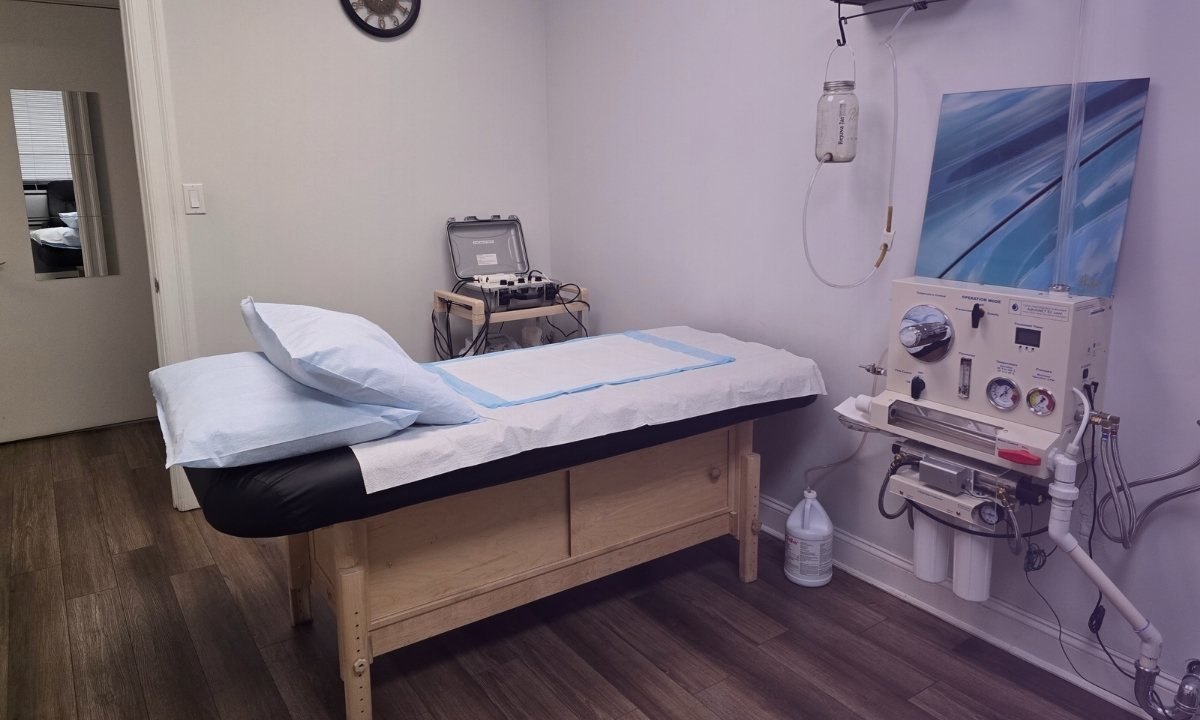
At Atlant Health, colon hydrotherapy is described as a gentle internal cleansing of the large intestine using temperature-controlled, purified water delivered through a small, single-use speculum, with waste and gas released through a closed system into a sanitary line (no odor, privacy maintained).
It is:
A supportive tool to help clear retained waste and gas
A way to hydrate and stimulate elimination pathways
A comfort-focused, therapist-guided session
It is not:
A replacement for a GI workup when needed
A cure for every cause of constipation
Something you should do if you have contraindications (more on that below)
If you want a full overview of the therapy itself, here’s our main service page: Colon hydrotherapy in NYC (colonic hydrotherapy).
How colon hydrotherapy may help chronic constipation
When people ask, “How can water help constipation?” the answer is simple and clinically grounded:
Hydration, plus softening of retained stool
Water exposure can help soften compacted stool and support easier release, especially when stool has been sitting and drying out. Atlant Health – Wellness Center
Support for natural peristalsis
The process can stimulate the colon’s natural muscular contractions (peristalsis) – the movement your body relies on to evacuate.
Release of trapped gas and “blockage pressure”
Many constipated people don’t just feel “full,” they feel blocked. Gas trapping can intensify discomfort and make elimination harder. Our FAQ notes that when there’s gas blockage or extreme constipation, there can be slight discomfort right before a release, and the therapist uses gentle techniques to help things move comfortably. Please visit our FAQ Page for more answers.
A reset moment for people who are stuck in cycles
Sometimes the biggest benefit is this: once you get one quality release, your body remembers the rhythm again, especially when you follow it with the right hydration, food, and routine.
Is there scientific research behind colon irrigation approaches?
The research landscape includes related approaches like colonic irrigation/transanal irrigation, especially in refractory constipation populations.
A pilot study in IBS suggested colonic irrigation may improve constipation-associated symptoms (with the important note that larger trials are needed). PMC
Transanal irrigation has been studied in constipation management in certain populations and can improve constipation-related outcomes in controlled trials. Gastro Journal
A registered clinical trial is evaluating “Modern Colon Hydrotherapy” and intestinal transit outcomes. ClinicalTrials.gov
If you’d like external references to include in your post, these are reputable, research-forward sources to cite as “ongoing/adjacent evidence”:
ClinicalTrials.gov: Influence of Modern Colon Hydrotherapy on Intestinal Transit (NCT06438068) ClinicalTrials.gov
PMC: Treatment of irritable bowel syndrome with a novel colonic irrigation apparatus (pilot study) PMC
Does it hurt? What if I’m extremely constipated?
Colonics should not be painful. That’s a firm point in our educational content. However, if someone has extreme constipation or gas blockage, there may be mild discomfort right before a release, then relief. Our therapists use gentle massage/manipulation techniques to reduce discomfort and support the process. Atlant Health – Wellness Center
How many sessions do you usually need for chronic constipation?
For chronic constipation (especially when diet and supplements fail), one session may help, but it often isn’t the whole plan.
Many wellness practitioners recommend starting with 3–6 sessions, typically spaced 1–2 weeks apart, then adjusting based on goals and response. Please read our article here – “How Often Should You Do Colon Hydrotherapy for Maximum Benefits”
A helpful next read if you want to set expectations clearly:
How often should you do colon hydrotherapy for maximum benefits?
Preparation and aftercare (this is where results are made)
People focus on the session, but your prep and aftercare determine how well your body holds the benefit.
Preparation (simple)
Our FAQ guidance includes avoiding food for 2–4 hours before your session. Atlant Health – Wellness Center
Aftercare (the “stay regular” strategy)
Our post-colonic dietary guidance emphasizes:
- Plenty of fluids (water/herbal tea/electrolytes)
- Vegetable soup shortly after
- Avoid raw fruits/vegetables right away
- Avoid gas-forming foods for ~2 days
- Support gut flora with yogurt/probiotics
- Expect your next normal bowel movement often 1–3 days after (some people go sooner; some later). Please check our “Diet After Colonic Guide“
Who should NOT do colon hydrotherapy?
Safety matters. Our FAQ lists several contraindications and scenarios where you should avoid colon hydrotherapy or consult your physician, including (not exhaustive): Crohn’s disease, diverticulitis, rectal bleeding, intestinal tumors/perforations, severe hemorrhoids, uncontrolled hypertension, recent surgery, certain heart or kidney conditions, and first-trimester pregnancy, among others.
Also: if you have severe abdominal pain, vomiting, blood in stool, unexplained weight loss, fever, or sudden changes in bowel habits, don’t self-treat, get medical evaluation first.
Key Takeaways
If you’ve tried everything and still feel stuck, constipation may be a retention + motility problem, not a supplement problem.
Colon hydrotherapy may help chronic constipation when diet and supplements fail by hydrating stool, supporting peristalsis, and releasing trapped gas.
Comfort and safety matter: colonics shouldn’t be painful, and contraindications should be respected.
For chronic patterns, a series approach and smart aftercare typically work better than “one-and-done.”
For many people, unresolved constipation doesn’t just affect digestion—it can also create bloating, inflammation, and a feeling of heaviness that interferes with consistency, which is why many begin asking whether a “can colon cleanse help lose weight” when nothing else seems to work.
Related Reading
- Colon hydrotherapy in NYC (colonic hydrotherapy service page)
- Transformative impact of colon hydrotherapy on constipation and diarrhea
- Everything you need to know about colonic hydrotherapy
FAQ: What people ask about colon hydrotherapy for constipation
Can colon hydrotherapy help chronic constipation when diet and supplements fail?
It can help many people,especially when constipation is driven by retained stool, dehydration, sluggish peristalsis, and gas blockage. It’s best used as part of a plan (hydration, food, routine), not as a standalone fix.
How fast does colon hydrotherapy work for constipation?
Some people feel relief the same day; others notice changes over several days. Your aftercare matters – your next normal bowel movement is often 1–3 days after.
Will a colonic “wash out” my microbiome?
Our FAQ explains it does not “wash out” good bacteria in the way people fear, and the post-care approach includes supporting healthy flora with probiotics/fermented foods. Atlant Health – Wellness Center – FAQ
Is colon hydrotherapy safe?
When done properly with a closed system, trained staff, and appropriate screening, it can be well tolerated, but it’s not for everyone. Review contraindications carefully and consult your doctor if you have GI disease, bleeding, or significant medical conditions. Atlant Health – Wellness Center
How many sessions do I need for chronic constipation?
Many people do best starting with 3–6 sessions, typically 1–2 weeks apart, then reassessing. Atlant Health – Wellness Center
What should I do if constipation keeps coming back?
That’s a sign to zoom out: motility, hydration, stress load, movement, meal timing, and medical evaluation (when appropriate). Colon hydrotherapy can be a reset, but long-term consistency often comes from a broader plan.